"The sectors of power that the dissidents will not want to grow for the same reason why companies will not put their ads newspapers like La Jornada. "
create something new in the midst of such noise. This is what we propose in Amauta imagine that a newspaper that gives space to discuss seriously the suffering, oppression, doubts and hopes of anyone who wants to participate. We are constantly bombarded with information , but we do not feel well informed, and theoretically, knowledge brings power, but we never felt so helpless . These frustrations that we feel are real. But where they come from and why we can not address them adequately?
There is too much noise. We throw bombs all over that information to attack the body to paralyze us. Before we believed in everything we were told, and now we do not believe in anything. In the end, the effect is the same. not want to participate nor control our destinies , then give the power over our lives to politicians and corporations through the ballot or the purchase of their products. And they make decisions and create the structures that shape our daily lives. If they choose wrong, we can give the fault and we feel happy and up for ourselves we have done better.
are guilty, because responsibility and the capacity of their acts of destruction increases with the amount of power that we give , but so are we. We prefer to take refuge in areas of information more and more closed and restricted to meet people who think like us, where we feel comfortable and we should not tolerate any criticism. We have become errant bubbles where we can only listen to ourselves.
preserve our individuality and diversity of opinion, but eventually we come to be the same: people who can not listen to others and realize that they share similar realities, still divided because people can only hear the sound of own voice, people who still can not be overlooked because the collective action necessary to recover the power that we gave away. Those who have control over our lives that we want to keep isolated because there is the possibility of a turning point total.
And this Amauta wants to open space, converse with others, form a community where we can all participate as equals, get to find information that lead us to question our ideas and I think until you have the desire to act together so that, at some point you regain control of our lives . Here in this moment, talking, let's create the first act of our existence.
But to create such a space, which is responsible to know and understand how and why the media contribute to our existing domain. From them we get our information, which affects our ideas about reality and base our relationship with the world and shape how we act in it. If the news we receive from the media say, for example, that the only way to save the economy, as well as ourselves, is buying more and more, then we will follow this recommendation.
's something so fundamental to our way of life that our social position, and our happiness can be guaranteed only by the capacity we can buy. And because we believe completely in this doctrine of consumerism, we have exploited and abused of our resources to the point of destruction, which we have difficulty quitting .
We have underestimated the needs of the environment, same way as the needs of the rest of humanity, seeking the illusion of personal security that bears our material well-being. The media have spread this idea in every corner of the planet because it is the "truth" that has been allowed to pass through the different filters for power resonates through the company, being converted in this way, in the only realistic option for our lives.
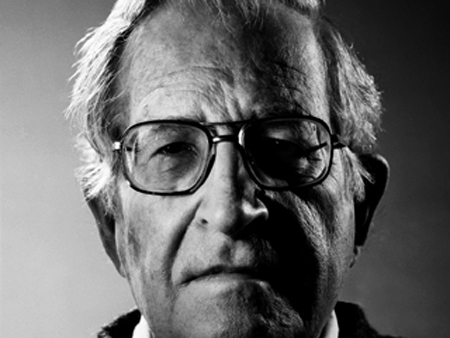
This is, in most cases, our reality. But it must be. It is simply what we have said, and Here we see the world in that way. To uncover the influences that dominate the structure of our current media (and in this way truths that are allowed in our society ) and be able to deal with them for a change, we decide (and we had the great opportunity) to speak with a of public intellectuals and linguists who have studied the issue in depth: Noam Chomsky.
Co-author with Edward S. Herman de Guardians of Liberty (in English, Manufacturing Consent: The Political Economy of the Mass Media) and author of works such as Necessary Illusions, Propaganda and public opinion (through interviews with David Barsamian), Chomsky shows how media were propaganda tools that filter the thoughts " inadequate" and thus propagate the dominant ideas of those who for economic circumstances, or (e) policies, have the resources to fill posts social giving access to expand their voice, while the rest have the right (or duty) to listen to them.
He does not believe that these dominant ideas are equal to each other (there may be differences between state and corporate interests, for example) or that journalists are exercising their profession with honesty and a certain independence, or that there are small groups power and are planning to conspiracies determined to deceive and manipulate large scale for their own profit. Do you think that the monitoring parameters that limit the debate to impose through a system based on the accumulation of resources: who has more money and more power will have better access to mass media to express his preferences and ideologies.
We succeed because, simply, can buy the space and restrict competition to only those who are planning to dedicate this information for commercial purposes or values \u200b\u200b"acceptable" as to maintain social order, compliance and consumerism as indisputable role in our lives. So Chomsky explains in one of our recent conversation:
"Many people in the media people are very serious and honest and will tell you, and I think they are right, no one forces you to write anything (... ). What you do not say, and perhaps are not aware of this, and lets you write freely because they conform to standards, and their beliefs conform ... to the doctrine of the system, and then yes, let them write freely and without pressure . People who do not accept the doctrine of the system will try to survive in the media but it is very unlikely that we are able ...
whole intellectual culture has a system that filters, begins when you are a small school. It is hoped that it will accept certain beliefs, styles, models, and so on. If you do not accept them, maybe you say that you are a problem, you have a problem behavior, and you eliminate. This happens in universities. But, it's a trend, then there will be exceptions, and sometimes exceptions are very surprising. For example, this university (Massachyìusetts Institute of Technology), in the 60 activists during the '60s, the 'university was almost a 100% funded by the Pentagon. E 'was also one of the leading academic centers of resistance against war (Vietnam) ...
The trends are very strong and the rewards for compliance are quite high, while the penalties for failing to comply can have serious consequences. It is as if you sent in a torture chamber (....), But may hinder your growth in the company, could affect your work, it could affect the way you are treated as contempt, rejection, and defamation complaint. "
But Chomsky insists that this has happened in every society throughout history. The persecution of those who have challenged the belief that the oppressive authorities dictate observed since ancient Greece el 'because the Bible was "the fields of power does not want to grow the dissent for the same reason that companies do not put ads in newspapers like La Jornada."
In mid-September, the anniversary of 25 years of La Jornada, Chosmky was one of the guests of honor, a newspaper which he views as "the only independent in the hemisphere." But, says he is surprised that this happened for the Mexican newspaper has not only survived because without much publicity, but also because it touches on topics of great importance beyond the limits of what is considered "acceptable" and continues to be one of the largest and most popular source of information in the country.
Normally, as in his own country, the U.S., the mass media as the New York Times and CBS News , perform a vital role by supporting the areas of power because their "liberalism" turns them into "guardians of revenue" that marks what may be published and what not.
"I think we are moderately critical in the margins. I'm not totally submissive to power, but are well controlled up to knowing they can go " says Chomsky. Cites the example of the war against Vietnam, where the media does not question the intentions of the government, because they believe he's always trying to "do good", but you get to critique the plans, strategies, and perhaps the abuses committed when it failed in the mission or when he dies so many people that it is impossible to hide beyond.
Even Obama has been called "liberal," says Chomsky, he has criticized the previous government for the strategic mistakes and not because he thought that the war in Iraq or Afghanistan are bad in itself. In these moments, after the escalation of the army in Afghanistan, Chomsky proved to be right: Obama is "liberal" because they do not question the intentions of the state of war but he thinks he can do better.
They are called "liberals" not because they are, but because it is the most extreme left can go where the areas of power and continue to be more comfortable that there will be something that affects the hierarchy established. According to a study by the Pew Research Center, only "29% of Americans say the news report the facts correctly" and "more than twice (of respondents) say that the press is more liberal than anyone that is conservative" .
At most, the American people see the media as a liberal entity, there is a drive to the right by a lot of answers. Both the radio and in television professionals in these areas right in the U.S., have a "consistent message" that attracts "a great audience" because they are addressed to "genuine grievances" of their audience, says Chomsky.
"Put yourself in the position of a person, presumably the American common " I am a good worker and devout Christian. I take care of my family, I go to Mass, you know, I all "good." And I am robbed! Over the past thirty years, my income is steady, my working hours and increase my social benefits are reduced. My wife must have two jobs to bring food home. Children, God, no one to care for, the schools are terrible and so on. What have I done wrong? I did everything I needed to do, but something is going wrong. "And then the journalists have a right answer for them ... .."
Those journalists take advantage and exploit the legitimate discontent of those affected by the false promises of the government, the lies of the mass meda and corporate theft. No trust because hanno dipinto loro una vita che non esiste ai loro orizzonti, perché la loro realtà è un’altra, più dura ma disinfettata in modo che chi ha potere possa cambiare le loro circostanze e possano inghiottire la storia che l’attuale sistema funziona perfettamente.
Per i settori del potere, il capitalismo ha funzionato ed è stato meraviglioso, e come quella è la loro realtà, questo è quello che credono e predicano. E siccome hanno il controllo degli apparecchi possono farsi ascoltare in modo esteso, questo è l’unico rumore che in verità si innalza sugli altri.
Per molti, come lui stesso, riconosce Chomsky, "There is going well. For example, there are many complaints about the health system, but I get wonderful medical care. Our medical care is distributed according to wealth and (a certain type of people) everything is ok. But not for those who listen to these programs, and that's a big slice of the population. "
Then those journalists are able, for the simple reason to admit that there are problems, to become a powerful voice in defense of those who have been relegated to the margins of society, and so, ironically, build their own power and money marketing support and trust of the listeners.
As they get richer, offering false solutions that focus on populist anger against the "immigrants" or "socialist" or "feminists" who have virtually total control of the government, and so create discussions among people with similar problems and distract from the fact that these theorists leaders enrich themselves even with the current system and encourage, rather, a world where their ideas, and rich white men, is the supreme law. That is, what they're doing is strengthen the existing system to exclude more people than before who had little benefit. But these contradictions are lost in the cries that are blocked, drowning in the noise of fear and anger.
How then can we confront and resist the easy ideas that tend to deceive and hinder a real change? You can? Much has been achieved?
"(These models) have broken up at some point. It 's why we no longer live in tyranny, you know, the king does not decide what's allowed, there is a lot more freedom than there was before. So yes, you can alter these patterns. But while there is a concentration of power in one way or another, both arms, capital or something else, while there is concentration of power, these effects (trends to comply within the framework of the social) are unpredictable. "
Chomsky says of being with a certain frustration in the intellectual circles of the left in his recent trip to Mexico because they feel "that there is some concern and activism popular, but very fragmented." That these groups have agendas very limited and specific to certain struggles and does not relate and work together. Well, this is something that must be overcome if you want to build a broad popular movement. And the media can help .... "But it takes organization. The organization el 'education, when they interact with each other find strength between them, they support mutuamente”.
Amauta allora vuole tentare di creare lo spazio dove diverse persone e gruppi possano discutere, qualunque sia l’ideologia, intorno ai problemi sinceri della nostra comunità e non come strumento di propaganda o di interesse personale. Dove, forse, possiamo essere i padroni delle nostre voci, e la nostra parola valga più che la parola dei politici in tv, e i nostri discorsi ci informino più di quanto lo possano fare i mass media attuali. Ma principalmente, vogliamo espandere il dialogo in ogni angolo possibile per collaborare e partecipare insieme in un movimento o vari movimenti che perturbino e cambino lo stato attuale del nostro mondo.
Come ha scritto Chomsky in his book Democracy and Education ", a leftist movement has no chance of success, and does not deserve it if he gets an understanding of contemporary society and a vision for a future social order that is convincing to the majority of the population . Its goals and organizational structures must be through the active participation of the people in the popular struggles and social reconstruction. A true radical culture can be created only through the spiritual transformation of a huge group of people, in which the main element of any social revolution is to extend human creativity and freedom. "
To resume our voice and convert into artists, journalists, creators of our truth and engines of change, Chomsky gives us a practical example of what he considers "a direct investment in creativity."
He says that about 15 years ago in Brazil, Lula da Silva, then president and trade unionist, he brought in a neighborhood outside Rio de Janeiro where there was an open space, a square. "It 's a semi-tropical country, the whole world is out, and at night. A small group of journalists in Rio, professionals, have left that night with a truck parked in the square. The truck had a screen on himself, and tools per una trasmissione televisiva. E quello che stavano trasmettendo erano opere, scritte dalla gente della comunità, attuate e dirette dalle persone della comunità. Allora le persone del quartiere stavano presentando queste opere, e una delle attrici, una ragazza, forse diciassettenne, stava camminando in mezzo alla gente con un microfono, chiedendo alle persone che facessero dei commenti- ci sono molte persone lì, e sono interessate, guardando, c’è gente seduta al bar, gente camminando- allora hanno fatto i loro commenti.
E siccome c’era uno schermo, si trasmetteva dal vivo quello che la gente diceva su quell’opera, e dopo altri rispondevano a quanto si era detto, e così via. E queste opere were substantial. ... deal with serious themes. Some of the works were comedies, you know, but on topics such as the crisis of government debt, AIDS .... It 'was a direct investment in creativity. And I think that was something very clever. "
now up to us. We want that square, the one public space where the community come together to create something primordial. Actively seek more and more people directly involved to encourage a transformation policy, and perhaps one day, a real revolution. If you want to join, welcome.
Source: Voices From the Street


0 comments:
Post a Comment